Skip to content

Permanent Exhibition: Time N Space

Permanent Exhibition: Time N Space 精選圖片

展覽資訊

VENUE

Center for Art and Technology, National Taipei University of the Arts
3F Permanent Gallery

Book a Visit

Download Visit Application Form

Exhibition Introduction

Time N Space

As contemporary art evolves alongside civilization, the intervention of media and technology has continuously reshaped the boundaries of traditional art, giving rise to multifaceted, emerging forms of artistic expression broadly defined as “New Media Art”. The coexistence of time and space has long been regarded as a fundamental aspect of interpreting New Media Art. Whether through the spatialization of time or the temporalization of space, the multilayered entanglement of the virtual and the real foregrounds dynamism and immediacy, emphasizing dialogue, interaction, and perceptual experience. Taking this uniqueness as a point of departure, the exhibition navigates extensions beyond conventional spacetime, exploring the potential for transdisciplinary creation across multiple dimensions, while seeking to awaken the vast inner realms of human consciousness.

Artwork Introduction
Night of Sodom

Center for Art and Technology
Unmanned Theater / 2015

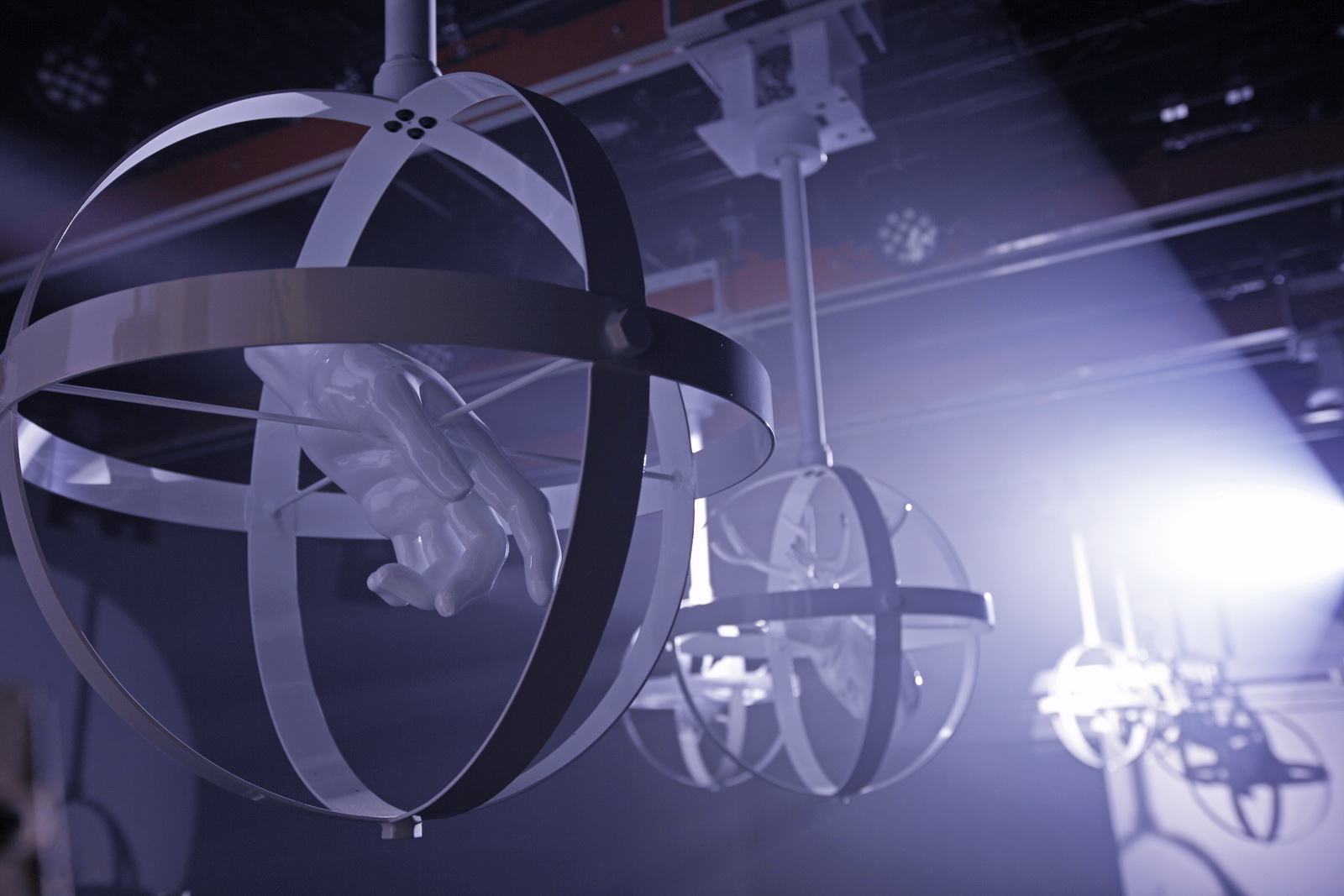
The Night of Sodom takes its inspiration from Marquis de Sade’s novel The 120 Days of Sodom. Using the events of a fictional murder as a narrative frame, the exhibition re-initiates considerations of contemporaneity.  A visual installation and a dynamic new media performance, the exhibition relies on symbolism and metaphors. Utilizing digital automation, the exhibition turns schizophrenia, contemporary disturbances, and ambiguity into images, light, sound, mechanical movement, body detectors, and lasers. The audience experiences the interplay among narrative context, new media visual effects, and theatricality, while further exploring the ways technology manipulates our lives and perceptions. The exhibition has constructed a large-scale, transdisciplinary work that deals with the plight of civilization and sublimation resulting from death.

Moving Me Badly

Department of New Media Arts, Center for Art and Technology, Taipei National University of the Arts
Transdisciplinary Performance / Exhibition / 2019

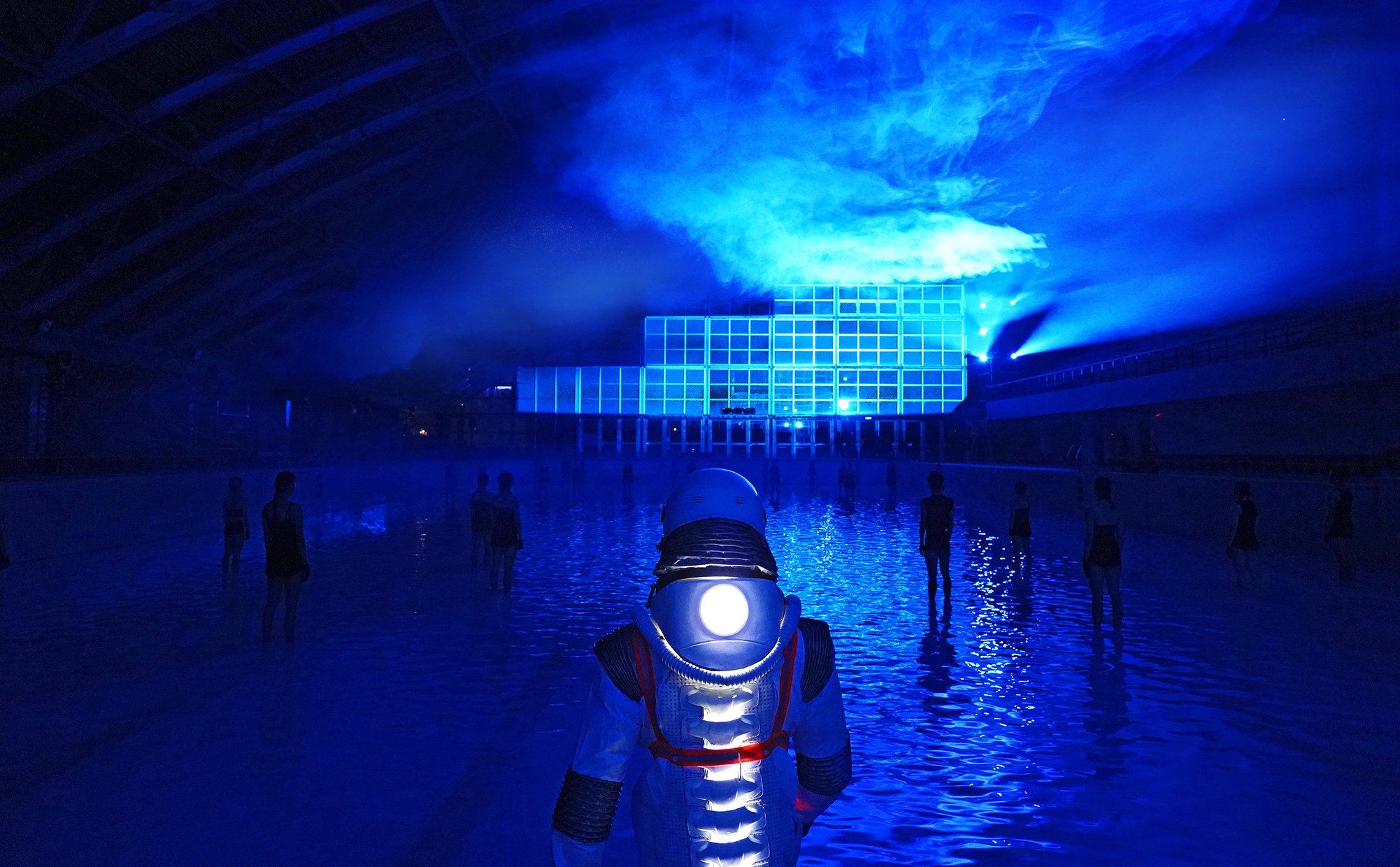
Integrating new media arts installation and transmedia performance, Moving Me Badly triggers bodily senses of the audience through light. It is an attempt to open up a new kind of transdisciplinary art action. Reflecting then conditions of the TNUA’s swimming pool, where the physical infrastructure is damaged and temporarily closed down, while the original sports function is also being released. Moving Me Badly hints at multiple facets of the term “Bad” and furthermore allows the transformation of “bad space and structure” into the key for loosening and opening up the borders of the system. It is also a contact zone where different elements such as new media arts, smog, laser, visual images, sound, wearable devices, and dance encounter, gather, overlap, confront, converse, and integrate. Moving Me Badly is also a call to ghosts of sport punishment and war mobilization history hidden inside the “bad” or damaged space.

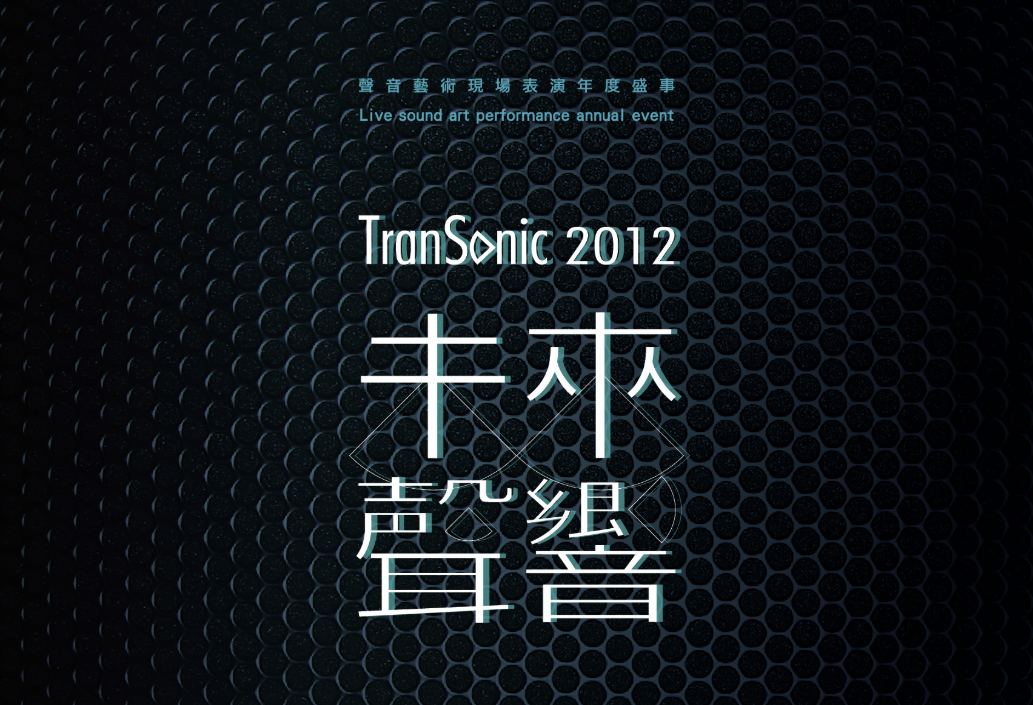
TranSonic 2012

Center for Art and Technology, Taipei National University of the Arts
Sound Art Performance / 2012-2013

First presented in 2008, TranSonic is a sound art performance produced by the Trans-Sonic Lab. Showcasing sound creation as its main program, it reaches beyond the boundary of sound and attempts to combine diverse media, including sound and light, images, interactive control, sensors, instruments, and installations in an interdisciplinary sound performance. It has become Taiwan’s forerunner and leader in cutting-edge sound art events.

SinCity

Center for Art and Technology, Taipei National University of the Arts Luxury Logico
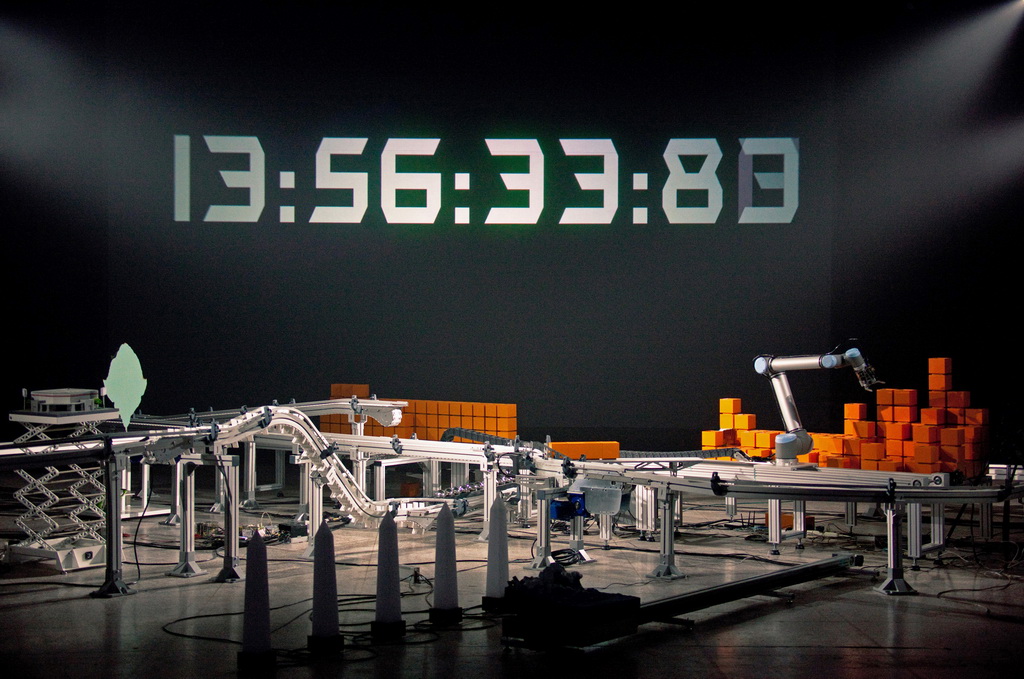
Automated Unmanned Theater / 2013

Sin City is a live performance created by combining and manipulating mechanical power, installations, and images in place of human actors, in an attempt to break away from the conventional theatrical focus on watching actors perform, the work seeks to create a new kind of audience experience. Sin City counts down the 24 hours before Earth ultimately destructs from an overproliferation of information, and tells the story of the crossover and pursuit between four characters. It attempts to explore shifts in the state of human existence in the digital information era, turning the usual concepts of sin on its head. As desire grows, reality is hollowed by information technology to become a modern interpretation of evil. The “unmanned” of unmanned technological media theater responds to man’s spiritual emptiness and falseness of existence.

It Could Be You

CHENG Hsien-Yu

Software (Customized Scripts and Bundle), Generative AI model, Real-time / Dimension Variable / 2022

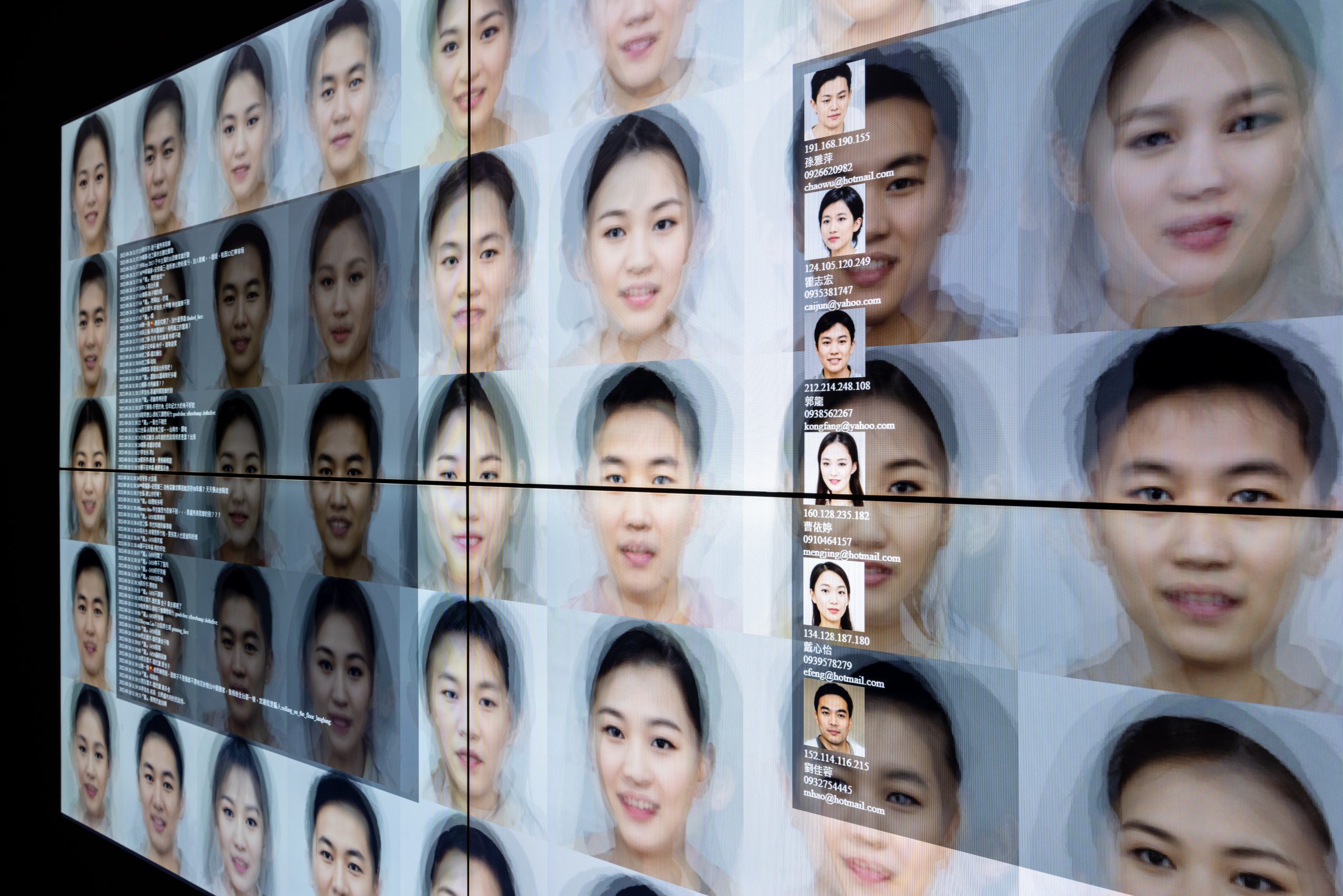
It Could Be You is inspired by CHENG Hsien-Yu’s observations of online communication, anonymous identities, and the leakage of personal data. Beginning with an automated browser, the work anonymously scrapes posts from forums and live chat rooms, then uses code to collect potentially corresponding images. Through machine learning and synthetic data, it generates sets of fictional faces, names, phone numbers, email addresses, and IP addresses, forming imagined personal profiles under the notion of “it could be you.” With a tone that is both humorous and cautionary, the work reveals how data is collected, recombined, and reproduced within digital environments, while prompting viewers to reflect on the fragility of online identity, the boundaries of privacy, and the traces they leave behind in the digital world.

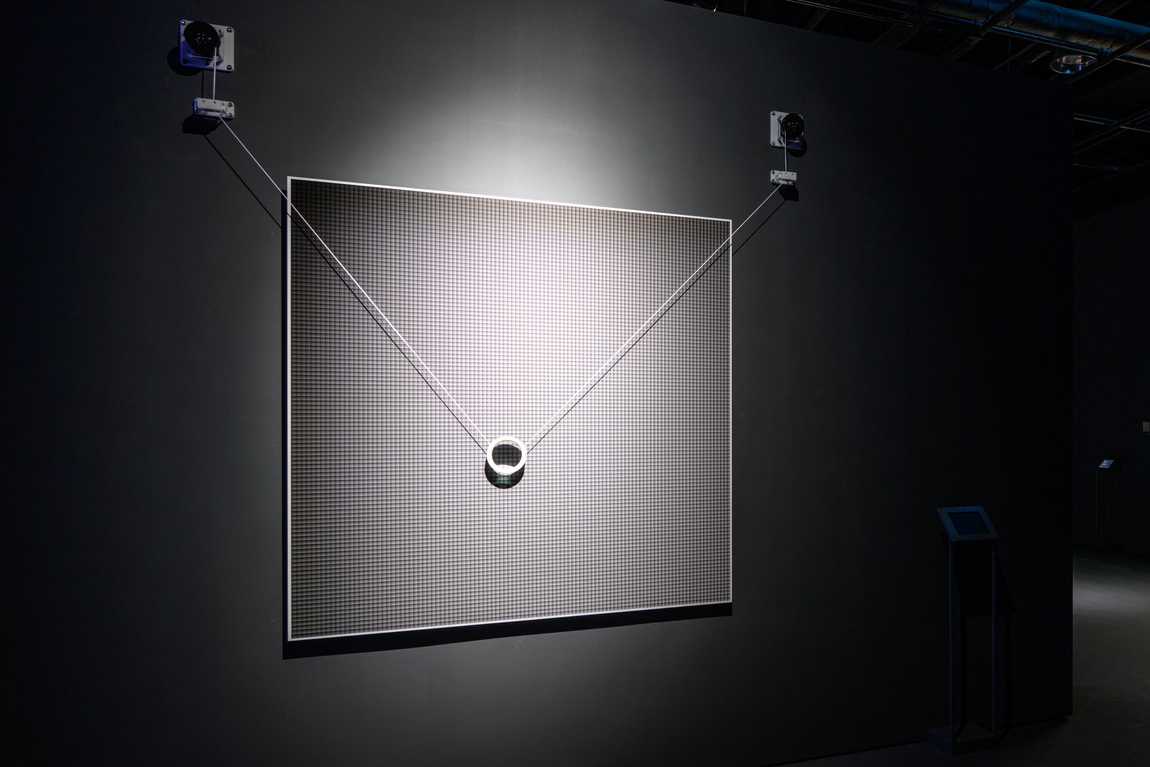
Oujia Board

LIU Chia-Ming

Mixed Media, Giclee Print, Mechanical Devices, Electronic Components / 200×200 cm / 2019

The word “Ouija” is composed of the French word “oui” and the German word “ja,” both of which mean “yes.” In computer networks, when humans want to connect to a server, they must first send it a “SYN” request from their device. After receiving it, the server responds with an “ACK (yes),” and the device must respond again with an “ACK (yes).” Thus, an interactive interface between humans and machines is established. This work converted four-place IPv4 numbers into four panels of 8-bit grayscale images, visually capturing the various nodes of the networks. In this way, LIU Chia-Ming has used a computer program to produce a “Ouija Board” with a new level of human-machine empathy.

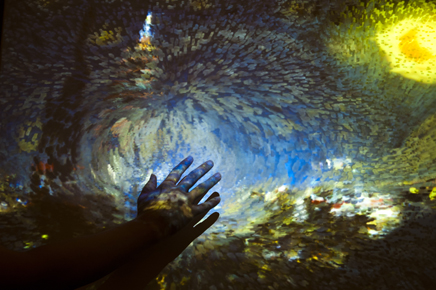
In Van Gogh's Eyes

LIAO Keh-Nan

Mixed Media / Dimension Variable / 2008

While photographing the night sky atop Taipei 101, the artist noticed a visual resemblance between the composition of the photograph and Vincent Willem van Gogh’s The Starry Night. The photograph is projected as a background onto a canvas, where interactive computer programming transforms viewers’ gestures into swirling effects, evoking the expressive brushstrokes of Van Gogh’s masterpiece.

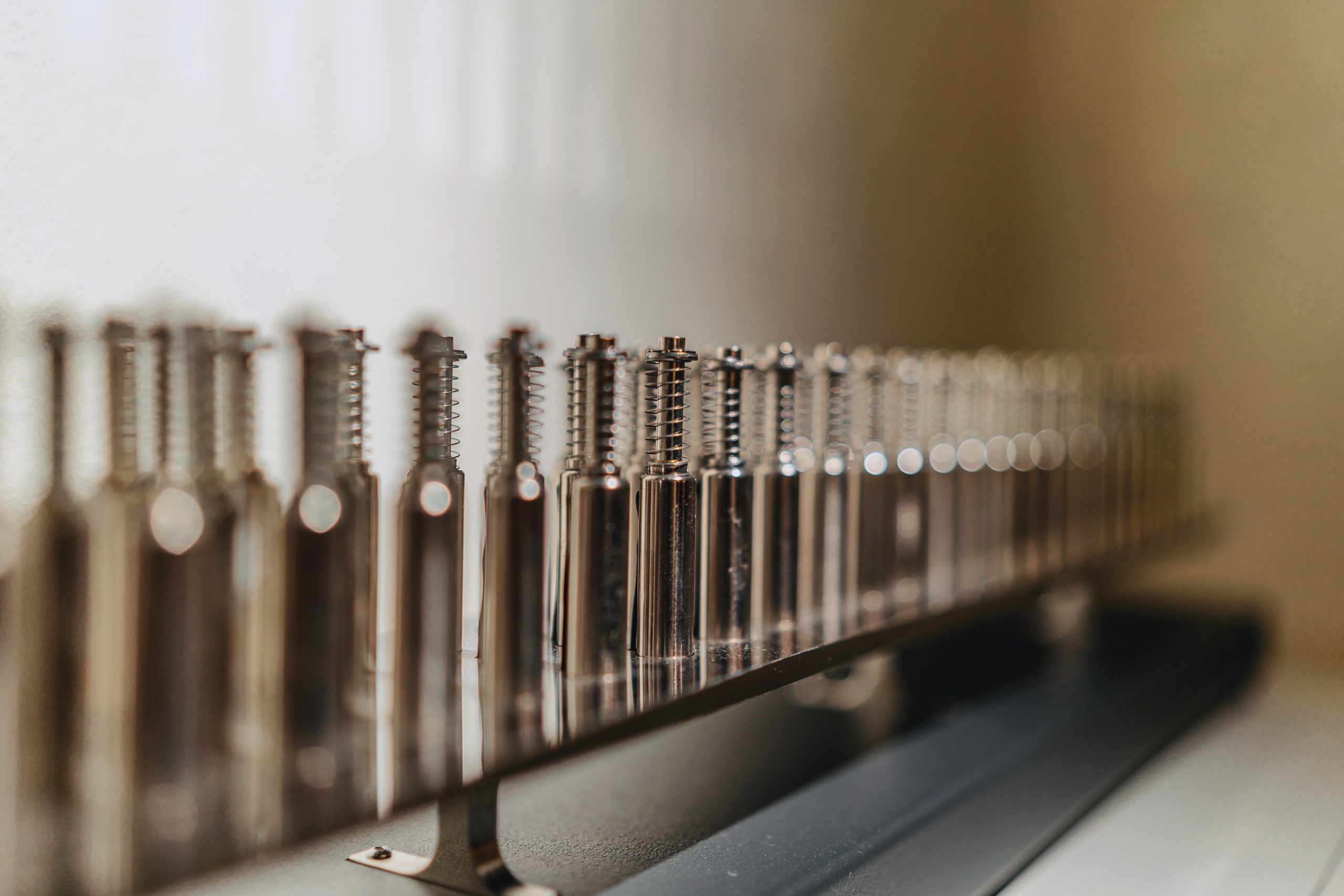
Kick#1 - Electromagnet

YAO Chung-Han

Electromagnet, Metal, Electronic devices, Computer / Dimension variable / 2021

The work Kick #1 – Electromagnet through the “misuse” of materials and places electromagnets within a dense field without striking any objects, discovering the previously unheard noise inherent in the material itself. This noise, arranged and composed, tells a “story” and conveys “drama” through sounds that are uncommon or unexpected in everyday life.

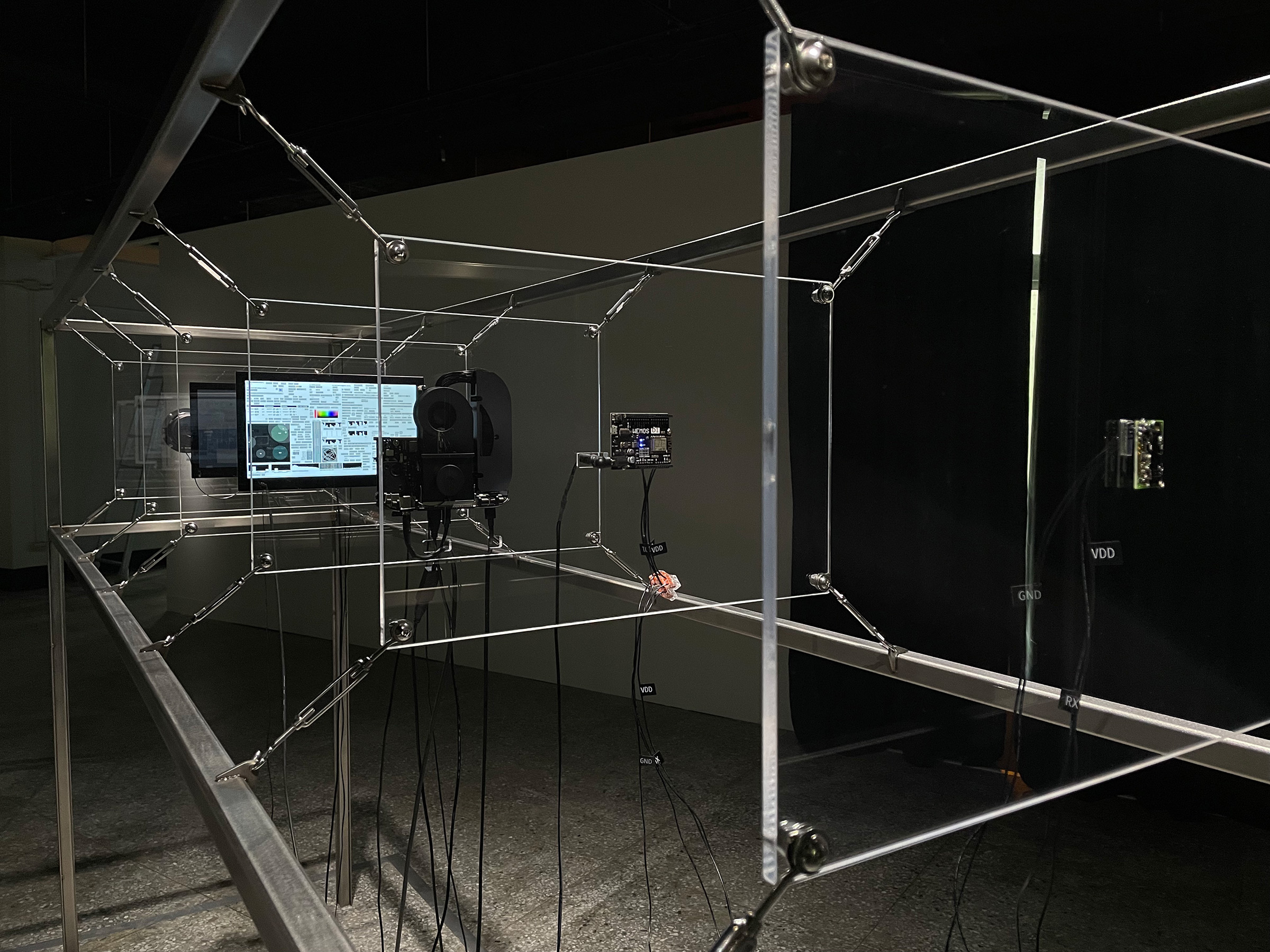
scape.unseen-co_2[ch.]

CHANG Yung-Ta

Stainless steel, Acrylic, IPS panel, Microcontroller module, Computer, Carbon dioxide sensor, Full-range speaker driver, Audio amplifier module / 86x306x180 cm / 2022

From linear perspective and the camera obscura to today’s AR and VR, technology has continually expanded the vantage points and quadrants through which we view the world. Meanwhile, the world we once constructed through sight, hearing, and the other senses is taking on a new face as digitization intensifies: a world formed by vast micro-sensing computation and data modulation – a world beyond the touch of the bodily senses, an unfelt world, an invisible scape.

Within the conceptual framework of scape.unseen, the artist transposes information technology and data monitoring into a series of works spanning spatial installation, sculpture, sound, program data, and real-time generated imagery, constructing relations between environment and technology at scales from the microscopic to the macroscopic. With the aid of technological prostheses, the works offer “reference points” for seeing amid the layered acceleration of contemporary information.

scape.unseen-co2 [ch.] monitors the carbon-dioxide concentration in the exhibition space and translates the data into a real-time generative audiovisual installation. Its data-processing sequence is unfolded like an exploded-view diagram and presented as sliced specimens – sensor → microprocessor → computer → program → image → sound – each layer offering a different facet from which to view and explore the relations among the work, the environment, and the human.

How are we to face the invisible? How do we read the connections that data and signals generate, and the meanings they compose? And what kind of world do they represent?

Star Cluster V

HSIEH Yu-Cheng

Fluorescent Acrylic, Rosaspina Paper, Aluminum Mounting, Fluorescent Lighting / 480x240x3 cm / 2026

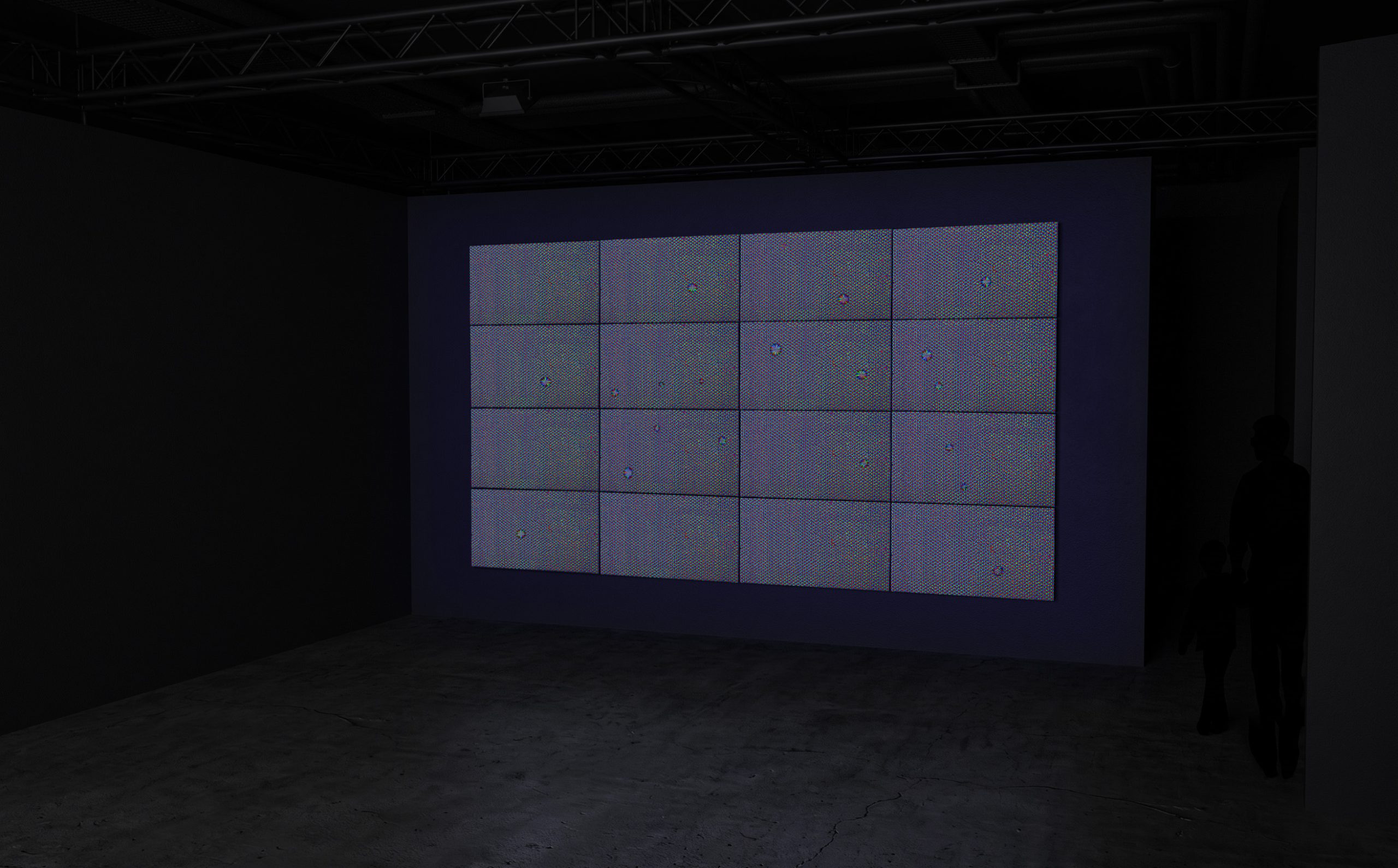
In Star Cluster V, the concept of pixels is used to construct a large-scale screen wall on paper. The artist combines the luminous properties of fluorescent pigments with perspective patterns of water drops to simulate the distinct light and visual illusion of a screen. Through the physical materiality of the medium and the reproducibility of printmaking, the work uses a “machine’s image” painted in pigment to question how we understand the production mechanisms and modes of viewing images when they exist apart from electronic screens.

Swimming

LuxuryLogico

LED tubes, Steel wires, Motors, Metal, Electronic Components, Cable, Computer / Dimension Variable / 2011

Elongated white light tubes are arranged to move slowly in a wave-like manner, continually rising, surging, and receding. This evokes a way of gazing into an infinite cycle – mirroring progression in nature, light, and life. Swimming through the flow, we sometimes drift with

the waves, other times resonate with the currents. Each moment here feels unique, yet it maintains a sense of sameness. Everything has its own rhythm, and moving freely within it without rushing creates a space to align with the waves and breathe in tranquility.

Somewhere in time

TSAI Yi-Ting

Machined Metal Parts, Motors, Belts, Wireless Power Supply, LEDs, Toy Cars / Dimension Variable / 2018

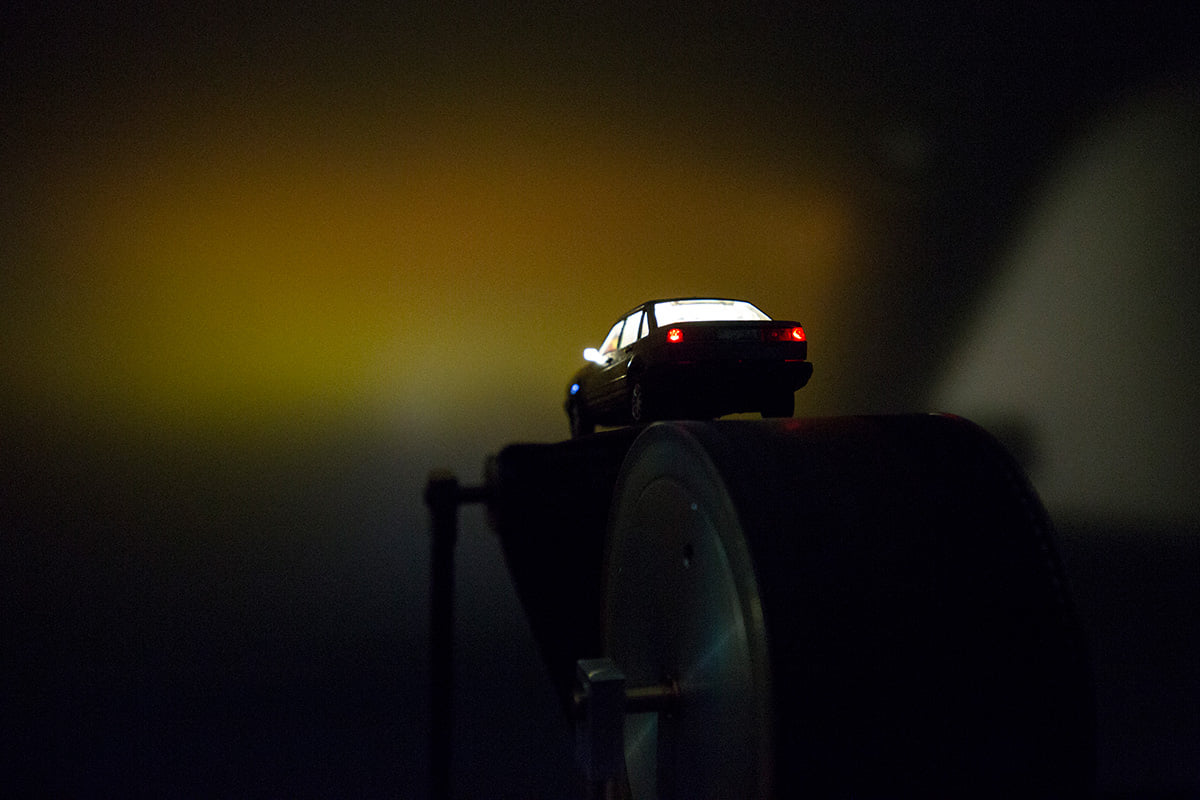
Somewhere in Time is composed of a toy car and a continuously running treadmill, creating an image in which the car appears to move forward endlessly while remaining fixed in place. Through this paradox, the work evokes the condition of human existence: constantly in motion through time, yet never truly reaching an endpoint. By means of mechanical repetition and shifting light, the piece connects speed, time, and the sense of being alive, while further inviting viewers to reflect on the interdependent relationship between life, the environment, and energy. Continuing TSAI Yi-Ting ‘s investigation into kinetic structures, the work transforms an everyday object into a concise yet poetic meditation on temporal experience.

The Unseen Layer

KOU Tak-Leong
Metal, Laser Light, Motor, Kinetic Structure Module / Dimension Variable / 2026

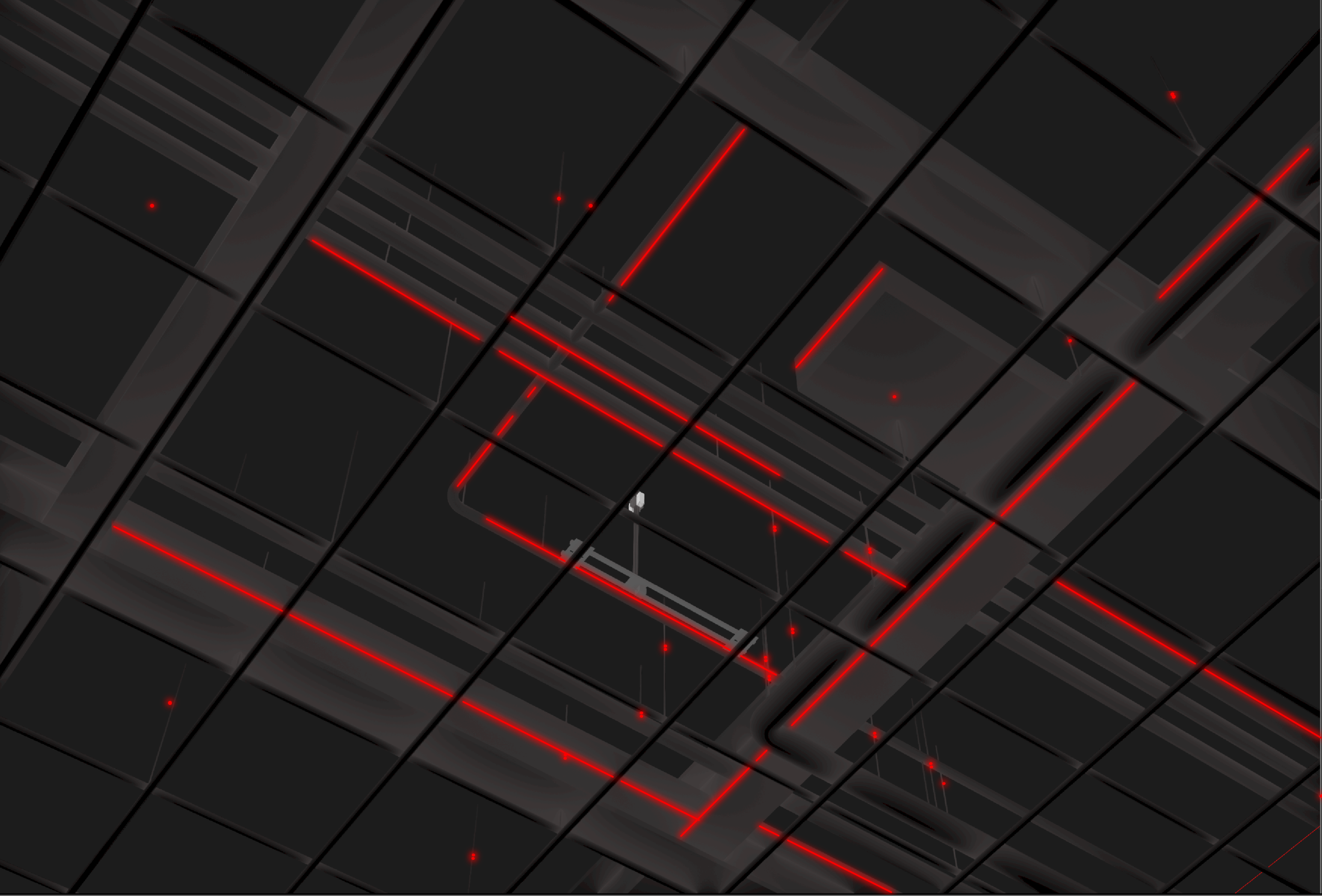
The Unseen Layer begins with the spaces within architecture that remain out of sight yet are always present. Pipes, equipment, and structural elements above the ceiling are typically concealed behind finished surfaces. Like layers temporarily switched off within a digital interface, they continue to participate in the operation of the environment without entering everyday view.

Using laser light as a medium of measurement and display, the work moves slowly and repeatedly upward and downward, scanning the space at different heights and producing horizontal lines that resemble sectional slices through a digital model. As the light passes, the forms hidden above are briefly traced before receding once again into invisibility. Through this process, the physical environment is translated into a continually shifting contour, while perception changes with the position of the light.

The work does not present the space as a whole. Through the intervention of light, structures once excluded from view become objects of sustained attention, revealing a spatial condition suspended between physical reality, digital model, and image.

測試版